
“With a pocket full of money, you are wise, beautiful and you can sing well”says an old Jewish proverb.
Jews are known as the people with the most knowledge about money. They are very careful with their money. They know how the economy works and act accordingly. They are interested in money and know how to make it, but also to keep it and multiply it. Jews are also considered to be a stingy people. However, those who make money, who work for it, value it much more. It is not about stinginess. When you work for money and know how it works, you have more respect and responsibility for it. Jews teach their children from a young age what money is, how they can earn it and multiply it.
Why talk about money?
Unfortunately, money is a taboo subject, a discussion that is not often encountered between relatives, friends, acquaintances. This confidentiality, let’s call it, does not help us to educate ourselves, to inform ourselves about money. Money has rules according to which it is made, preserved and multiplied. The financial and economic system is complex, but not unintelligible. It can be known and we can act in accordance with the principles of operation, so that each of us benefits as much as possible from the system. Just like the Jews do. They have a cult of money and an enormous respect for what money represents.
We complain that we don’t have money, that it’s too little, and that it doesn’t last from one month to the next.
Whether we want to accept it or not, money is an important resource in personal fulfillment. Our lives depend on money. Everything we own we bought with money. Most things, of course. We don’t buy absolutely everything with money, but most of it, we do. Money is a universal medium of exchange. It has replaced barter and made it easier for us to access the goods we need. Money is an important and unlimited resource, but it requires us to know the mechanism of its functioning very well and to act as such.
It is no use complaining about money: that we don’t have it, that we can’t keep it, when we don’t talk to anyone about money. Any information we find out can take us closer to achieving financial independence. It is said that every day we learn new things and that, if we are open, not a day will pass without us learning at least one thing that will help us later.
Financial education is not done in school. We are not taught any information related to money, therefore, this type of education is our responsibility. Financial education is part of permanent education, not mandatory, but necessary in life. And to inform ourselves, we need to be proactive. What does it mean to be proactive? First of all, let’s be open to approaching this subject, to integrating into our sphere of knowledge any information we receive and to put the information into practice in order to reap the fruits of education.
Financial education refers to the body of knowledge about money that can help us achieve our financial goals. It addresses the rules of money: how it is earned, how it is kept, how it is multiplied, and also, in addition to economic information, this type of education also aims at our openness to this subject, the psychological aspects: how we relate to money. The psyche influences the way in which we approach this subject and helps or hinders us from achieving our financial goals.
History of Money
Solomon is the one who laid the foundations of the monetary system. He is the one who started minting coins. The first coins were as big as a large chariot wheel. They were hollowed out in the middle and weighed up to 5 tons. And their size reached up to 3.5 m. To buy a piglet, a half-meter coin was needed, and for a wife, a 1.3 m coin.
The first coins, close to those of today, as an equal alloy of gold and silver, appeared between 640 and 630 BC. Hr.
Around the 900s, paper money appeared in China.
Taxes also had a moment of emergence: Octavian Augustus laid the foundations of the monetary system by taxing commercial transactions, land ownership and earnings.
In Romania, the Leu became the national currency in 1867 by enacting the Law for the establishment of the monetary system.
The name “leu” comes from the 17th century when Dutch thalers circulated in the Romanian states, with a leu engraved on them.
We have talked, so far, about the emergence, evolution, but what is the purpose of money?
- The existence of an accessible form of value, instead of barter
- The existence of better control of the economy
But another purpose of money? A purpose of magisterial importance?
The valorization of personality.
What do we need to live?
Water and bread.
But why do sweets and soft drinks exist?
The valorization of personality is the answer!
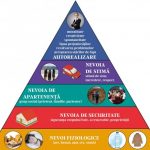
Appreciation, the need to be important, valorization represents the feeling specific to the human being; a compelling feeling, different from the feeling of hunger, of love. The feeling of hunger, for example, does not manifest itself for a while, after it has been satisfied and does not target several areas, as happens in the case of personality valorization. Personality valorization determines the purchase of “brand” products, entertainment in “girl” clubs, classified as V.I.P. where the products are much more expensive than their actual value.
Merchants capitalize on this feeling, this compelling need of the human being. And financial consultants who grant loans, too. There are people who take out a personal loan to go on vacation for a week and pay it off over 5 years (the loan).
There is an irrational part, a will independent of our consciousness, but we also have mechanisms that compensate and balance the irrational part.
If you want to be on the wave, you swim. If the wave comes and you don’t know how to swim, you will be under the wave and you will drown. To be on the wave, you use information.
I expect you to be on the wave, to make the most of the information you receive.
Success in becoming aware of money!




 ©2025 PSIHOLOGIA BANILOR - All Rights Reserved - Powered by


